I think of myself as a city girl. Drop me, alone, into Warsawa, San Francisco, Paris and I feel curious, happy and alive. So what was it about Lanckorona, a country hamlet high on a hill not too far from Krakow in Poland, that instantly grabbed me?
Yes, the place is picture-postcard perfect. But so are a lot of other Polish towns, yet they did not have this effect.
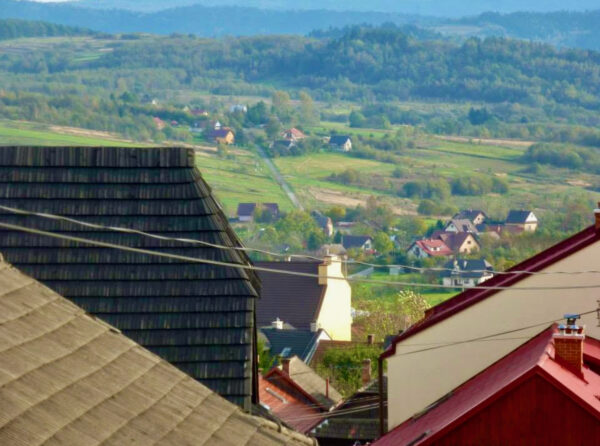
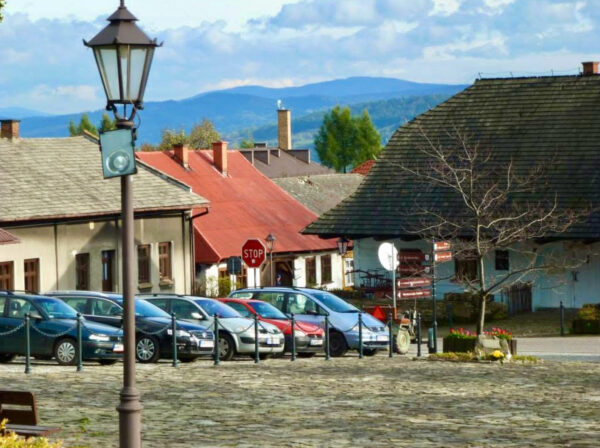
Sure, almost every one of the 19th century wooden houses close to Lanckorona medieval “market” square makes you want to reach for your camera. And the view across the rooftops to rolling green hills and distant forests from the grounds of the church is stunning.
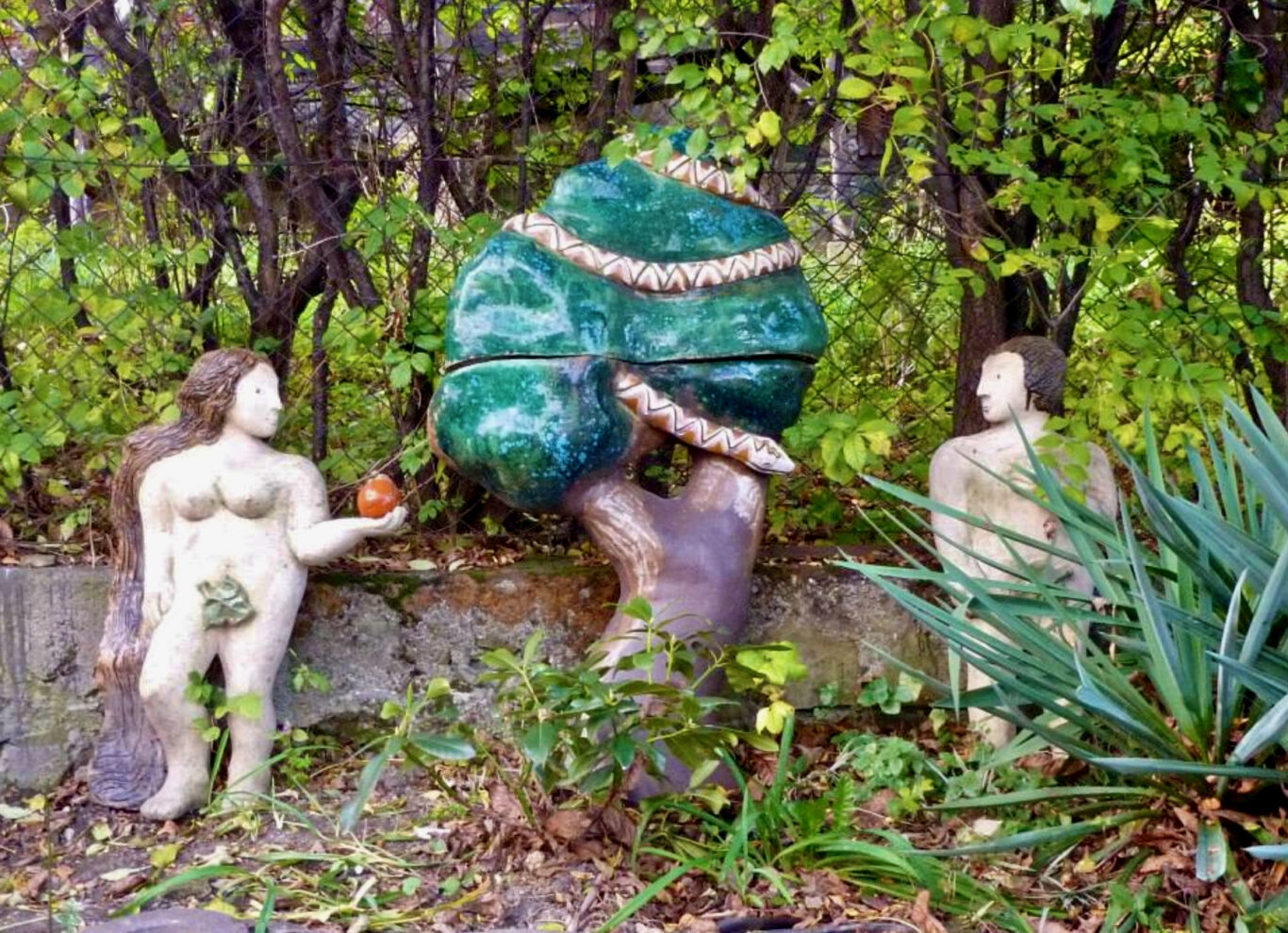
The story of how Cafe Arka, the delightfully eccentric coffee house, came to be built by a local ceramic artist who focused on the integrity of the village in every element of design and construction, is inspirational.
But the attraction went beyond the physical.
I was invited to Lanckorona for “a presentation of local dishes” as a culinary travel writer. I am the daughter of a Pole but I say with some embarrassment that I cannot speak Polish. Yet!
I have, for a long time, lived between South Africa, where my dad came after World War 2, and California. I write for print and online. Renata Bukowska, who is attempting to focus the world’s attention on the culinary traditions of the Lanckorona area and local and regional specialty products, invited me — in 2016 — to visit and to meet people similarly involved.
Among them, two young women, Wioletta Ruba and Beata Jurek, who are focused with the help of a website on making sure that children in the area learn about their culinary culture and that old people share their culinary secrets before they die.
The main idea, they are preparing a map of local products, very visual, geared to be used in classrooms by teachers to teach children what specific products their own small town and district traditionally produced. They have four villages and four districts. The ladies assocation would like to publish a book. They’re teaching women how to cook the local traditional specialty dishes at special classes.
They’re getting the older women to teach the children, too. And part of the project is finding forgotten recipes from grandparents before they die out. All to put in a book, funded in no small part by money from EU.
Horseradish soup: zupa chrzanówka
Traditionally the horseradish soup — zupa chrzanówka — we ate was made, they said, for Easter. Horseradish, bacon, sausage, ham, eggs. Easter leftovers were used. In a break from tradition — aka a new tradition — it is served all year.
Then there was Krzysztof Kwatera who is introducing the concept of kitchen incubators to Poland, inspired by a trip to the US in 1995 where he saw the incubator concept in New Orleans, Spokane and Idaho. He is president of a group supporting local partnerships, cooperation and collaboration.
Poland, like the US, requires that you have a certified place to make food. If you want to sell dumplings you need a certificate. If you have a certified incubator, you have the space.
An engineer by profession, Kwatera was the ideal person to introduce Poland’s first incubator for kitchens with a focus on small, quality producers. “We help them self-organize through farms and networking. Local products. Otherwise it would be impossible — too much capital outlay.
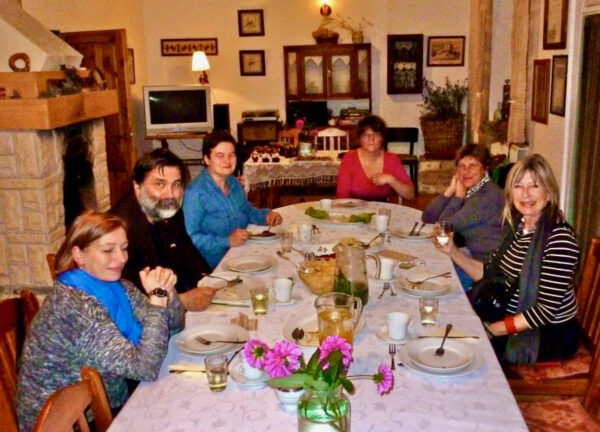
And two wonderful women Alicja Sikora and Anastazja Przywara, a local farmer, who run a guest house called “W Aroniach”. There are eight rooms for rent. They are less than half an hour by car from Krakow.
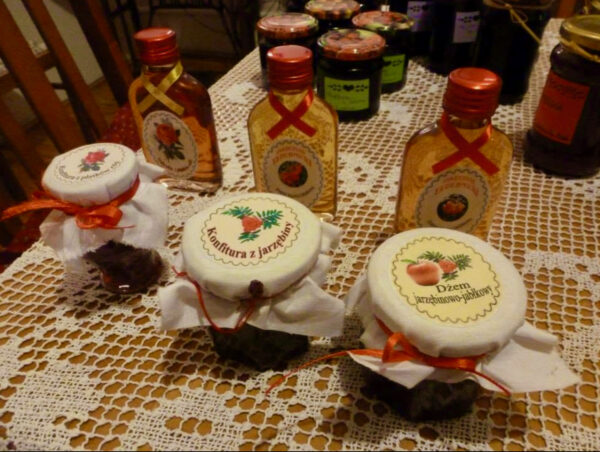
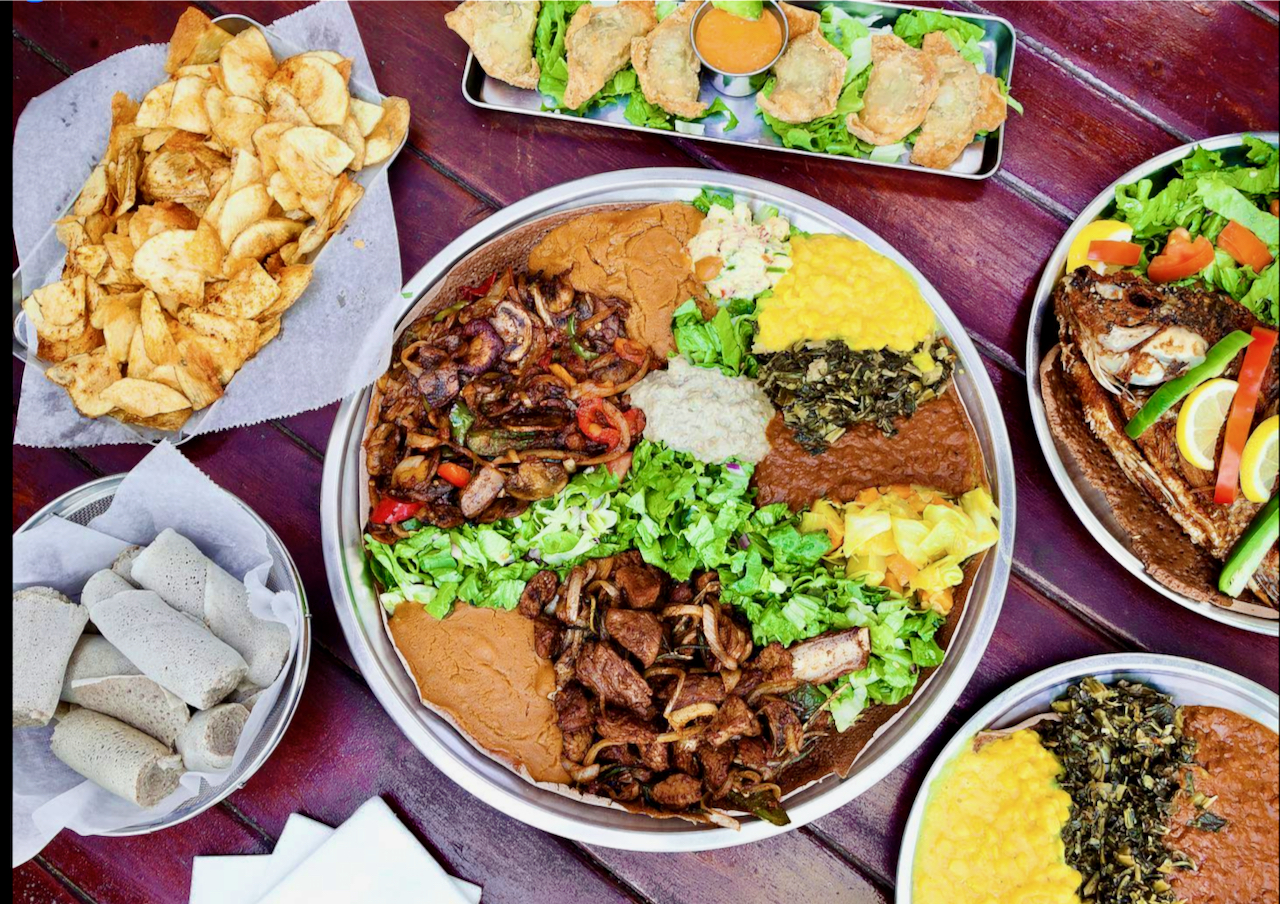
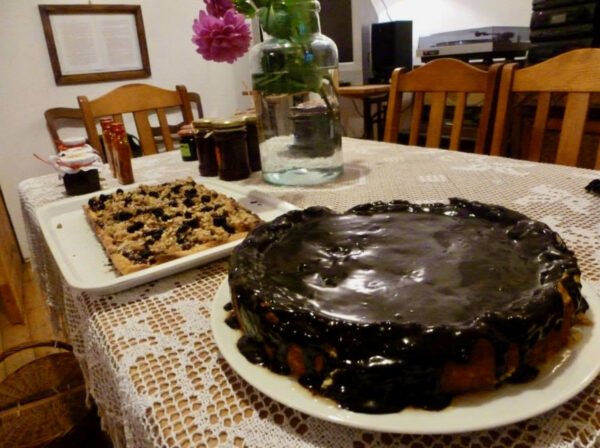
As a pair they make the most sublime cheesecake, Anastazja makes infused vodka-style drinks flavoured with berries and rose petals. Add jams and the most delectible pierogi imaginable with white cheese, potato, onion and a little bacon. Peirogi with wild mushrooms and cabbage. Melt-in-the-mouth potato peirogi. And meat pierogi with veal and pork..
They keep a flock of sheep not for any practical purpose, but “as friends”, which gives an idea of the inviting nature of their place.
“Do a lot of creative people come here?” I asked Renata after she noticed how enchanted I was with what has become her adopted home town.
Yes, she told me. And scientists, too. And tourists. And a lot of people visit for “the angels” since the locals made angels a symbol of their haven.
Before WWII this was a place people came to get away for the weekend from Krakow. A historic holiday resort town. There was a lot of damage during the war.
Now it’s become a getaway hotspot again. A creative center for workshops and weekends away.
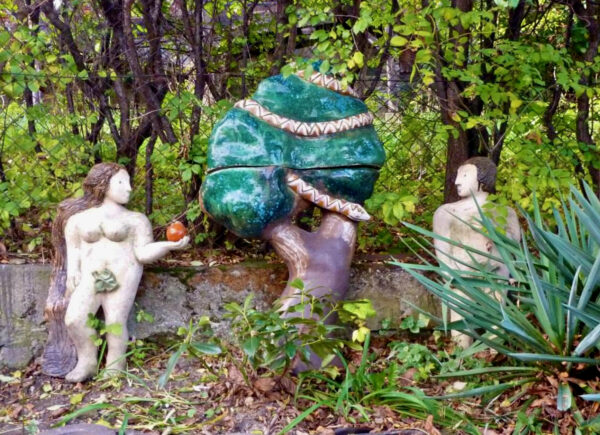
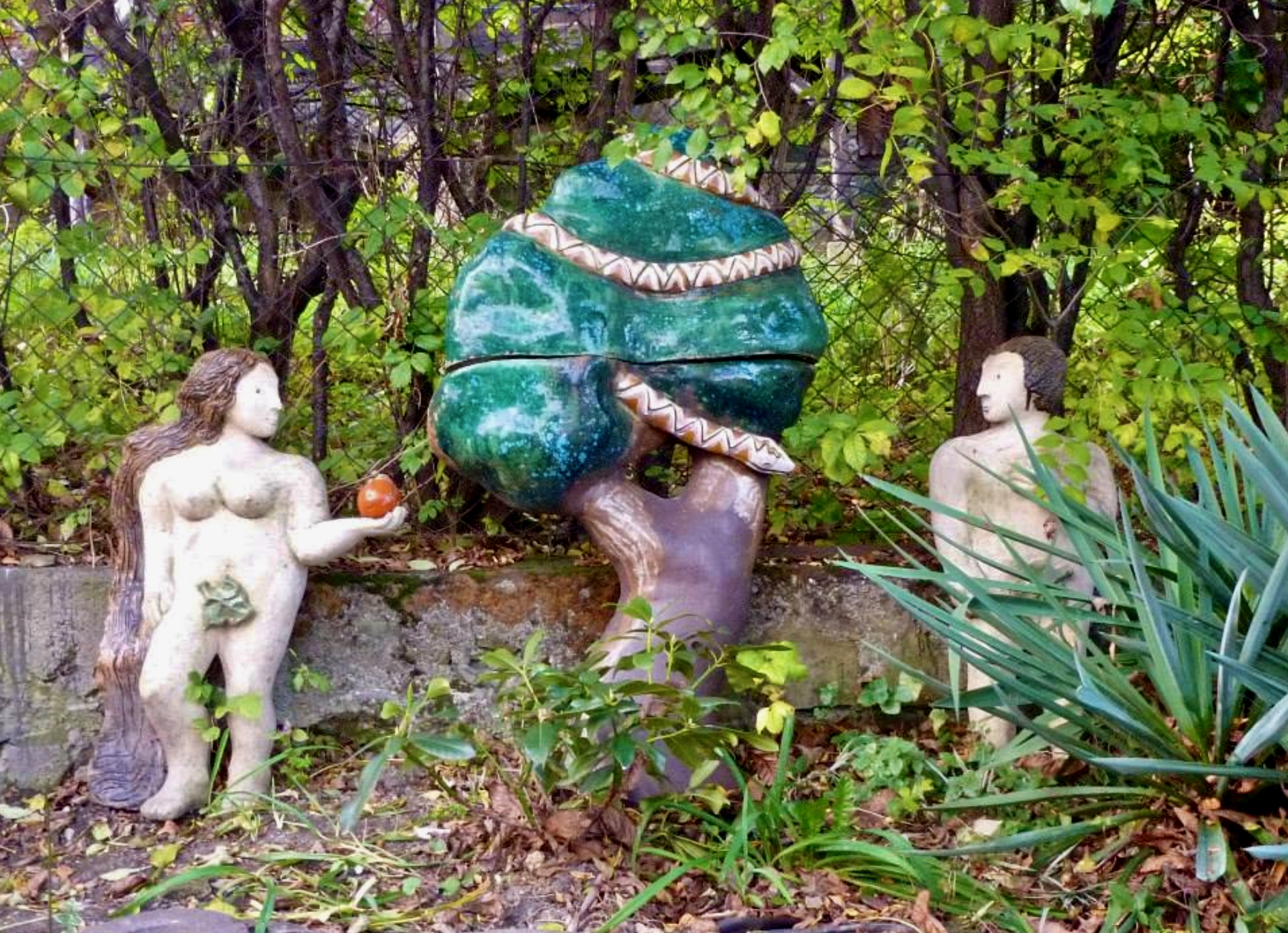
The proprietor of Cafe Arka had to get permission to open as a cafe. The couple who run it moved here, I heard, 15 years ago to made ceramics. They wanted to open a coffee shop but with the strict heritage rules in force, they had to move a house. All to do with the intergrity of the historic downtown. (down-hamlet in this case).
At Arka now, there is beer, wine, coffee, a small menu with perogi and home made cakes. Very quirky and sophisticated interior. The studio next door attracts artists.
But the Lanckorona appeal went beyond the physical nature of the place and the people. They produce furniture here, big-time. In the 17thC carpenters came here. There are still people who work with wood.
The angels are helping people
“The angels are helping people. The locals get involved. Now they are also organizing a festival of tastes and little tastes — cuisine and architecture/atmosphere. The weekend after December 6 is the festival,” Renata told me.
And, “Yes, it is a feeling,” she agreed, when I mentioned this.
Because I felt a feeling of belonging. Of creative energy. Of wanting to be there. “You must come back here and write your book,” she said when I mentioned feeling inspired by the vibe.
A couple of days later, when I showed pictures from my trip to my only first cousin in the world, my late father’s late sister’s only daughter, who came with her husband to meet me in Krakow, 30km away — and where I was spending a week — she stopped me short.
“You went to Lanckorona?” she asked, seemingly incredulous.
“Yes,” I said. “Why? Do you know the place?”
Turns out our grandfather (my dad and her mom’s father) had a house in Lanckorona, which was among many of the things he lost during World War Two, when he was forced to leave Poland for survival in the face of that particular wave of Russian atrocities.
I now wonder if something about that was playing into the attraction of the place for me. I’m pretty down to earth but I also know there are many things in life that we don’t fully understand.
I remember being at a talk in a physics hall on the University of California, Berkeley, campus and the professor made reference to the kinetic energy of molecules in the walls from the years and whatever had gone on in there. I hope that makes sense to someone other than me.
I had a sense of something. Meant to be there? Coming full circle?
I hope I will be back there to write the book! And to write again about Lanckorona and surrounds as a delightful culinary destination and intriguing culinary destination.
A version of this article was first published in Travel Examiner in 2016.